The Modern Burden: “Name It to Claim It”
In our modern lives, particularly in Western professional culture, we are obsessed with definitions. From the moment you wake up, you are bombarded with the need to label and define:
- Who are you? (Your job title, your net worth, your relationship status).
- Where are you going? (Your 5-year plan, your quarterly OKRs).
- What is this situation? (Is it a success? A failure? A crisis?)
We suffer from “Definition Anxiety.” We believe that if we cannot name something, we cannot control it. And if we cannot control it, we feel unsafe. When life takes an unexpected turn—a layoff, a breakup, a global shift—our labels fall apart, and we are left with a terrifying void. We feel lost because the “Name” we gave our lives no longer matches reality.
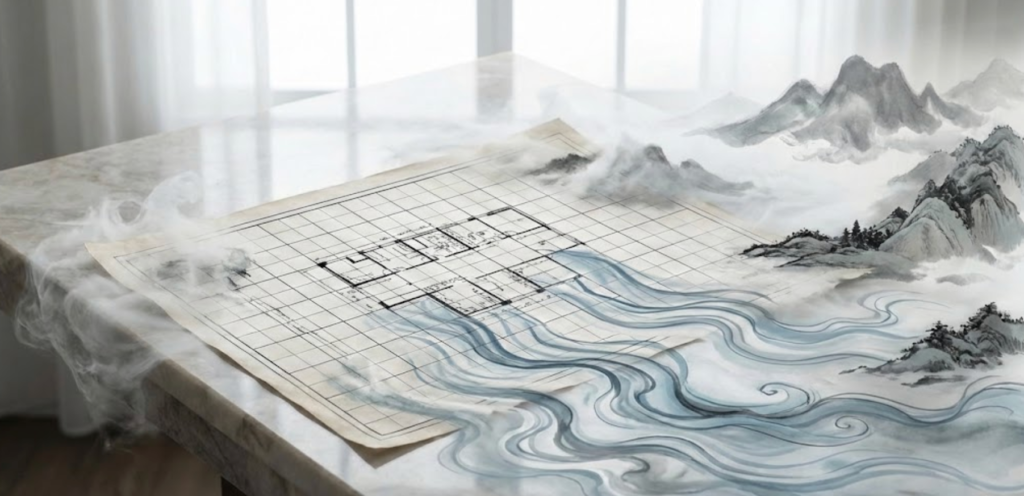
The Insight of Chapter 1: The Map is Not the Territory
Lao Tzu opens the Tao Te Ching with a radical proposition that directly challenges this anxiety:
“The Tao that can be told is not the eternal Tao. The name that can be named is not the eternal name.” (道可道,非常道。名可名,非常名。)
Lao Tzu is telling us that reality is fluid, infinite, and alive, but language and labels are static and limited.
Think of a menu in a restaurant. The menu says “Spicy Soup.” That is the Name. But eating the soup—the heat, the texture, the smell—that is the Reality (the Tao). We spend so much time obsessing over the “menu” of our lives (our plans, titles, and worries) that we forget to taste the soup.
The “Nameless” (Wu Ming) is the state of pure potential—the beginning of heaven and earth. The “Named” (You Ming) is the mother of specific things—the boundaries we create.
Both are necessary. But our pain comes from getting stuck in the Named and forgetting the Nameless. We mistake the map for the territory.
The Two Modes of Seeing: “Mystery” vs. “Manifestation”
Chapter 1 offers a psychological tool to switch our perspective:
“Therefore, let there be no desire, so that one may observe its mystery. Let there be desire, so that one may observe its outcome.” (故常无欲,以观其妙;常有欲,以观其徼。)
Lao Tzu suggests we need to toggle between two modes of being:
- The “Desire” Mode (Focus): This is where we usually live. We look at the “outcome” (the boundary). We set goals, we execute, we distinguish “success” from “failure.” This is useful for getting things done, but it is exhausting if sustained 24/7.
- The “Desireless” Mode (Openness): This is the antidote to burnout. It means looking at the world without trying to grab anything, label anything, or fix anything. When you drop the “need for a specific result,” you suddenly see the Mystery (Miao)—the subtle beauty and possibilities you missed while you were tunnel-visioned on your goals.
Practical Application: Embracing the “Don’t Know”
How do we apply this ancient metaphysics to a stressful Tuesday afternoon?
1. Reframe Anxiety as “The Nameless” When you feel anxious because you don’t know what will happen next (in your career or relationship), stop trying to force a label on it. You don’t need to decide today if this situation is a “disaster” or a “blessing.”
- The Shift: Instead of saying, “I am lost,” say, “I am in the Nameless state of potential.” The void is not empty; it is pregnant with possibilities that haven’t taken form yet.
2. Practice “Label-Free” Observation When you are in a conflict with a colleague or partner, we usually view them through a rigid label: “He is a micromanager” or “She is uncaring.”
- The Shift: Try the “Desireless” mode. Drop the label for five minutes. Observe them simply as a human being acting under pressure. When you stop “Naming” them, you might see the “Mystery”—the underlying fear or need driving their behavior—and find a new way to connect.
3. Loosen Your Grip on Identity You are not your LinkedIn profile. That is just a Name. When you cling too tightly to the Name, you become fragile (because names can be erased).
- The Shift: Root yourself in the “Eternal” part of you—the observer behind the thoughts. That part of you cannot be fired, demoted, or canceled.
The Spiritual Takeaway
Lao Tzu ends the chapter by calling this duality the “Gateway to all Wonders” (众妙之门).
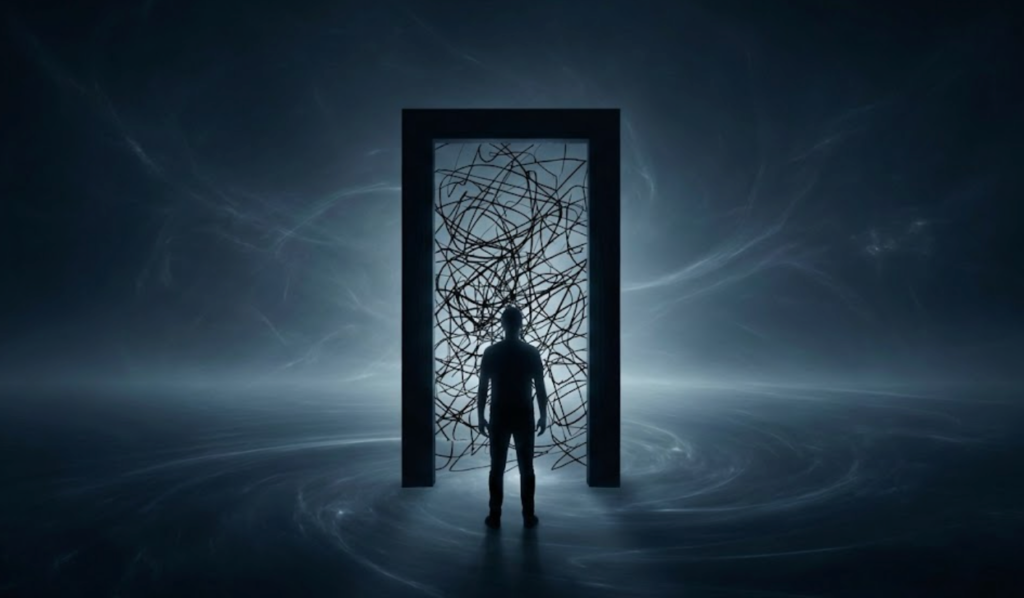
Peace is not found by finally figuring everything out. Peace is found by realizing that you don’t have to figure everything out. You can dance between the Known and the Unknown.
The rigid box of “Who I think I am” is too small for the reality of “Who I truly am.” Step out of the box. The air is fresher there.
🍃 Daily Practice: The “Unnamed Minute”
Next Step for You:
Today, when you feel a spike of stress or an urge to control a situation, try this simple 60-second exercise:
- Stop what you are doing.
- Look at your surroundings (or the problem at hand).
- Suspend all labels. Do not name the objects you see, and do not name the emotion you feel (don’t call it “stress” or “anger”).
- Just be with the raw sensation and the raw visual data.
- Breathe into that space of “not knowing.”
This brief return to the “Nameless” reboots your nervous system and returns you to the source of your creativity.
发表回复